Showing posts with label Personal Health Records. Show all posts

Monday, April 16, 2012

Personal Health Records Come In Many Flavors Today and Are Worth Having–Even If It Is Not Complete and Perfect

The article is from Information Week and I agree as I thought PHRs were great when announced.  I have a very small file but I also have my 87 year old imagemother with a PHR that is really good to have and we add to it from time to time and we have the basics in there, medications and allergies if nothing else are the top priorities for others to know as one or the other without enough information is enough to potentially kill or harm you with medical care.  There are both “tethered” and “non tethered” PHRs and for me, being I’m not part of a large group like Kaiser, the non tethered works for me.

I would not want one from an insurance company; however I would take all the information they had to offer in one way download file for sure.  It’s always good to see what is on file and sometimes you find mistakes too so with any PHR if you are offered information from a medical concern or insurance company that goes one way, take it.  Since Google Health and HeatlhVault started I began the section for PHRs on this blog and about 80% of the articles in that section are those two and I explored how bar coding can get in there too. 

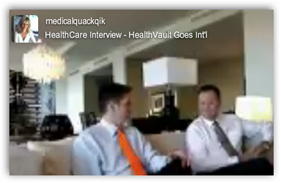
Way back in October of 2009 I even spoke with Curtis Schroeder from Bumrungrad Hospital as they were attending the first International Tourism Conference here in Los Angeles.  I recorded the interview with my phone and this was long before all were doing live broadcasts via phone.  Since QIK has now been bought by Microsoft and Skype I noticed my video is now gone..boo..but you can read my write up here.  That’s what I get for being ahead of my time:)

Interview with Curtis Schroeder, CEO Bumrungrad International Hospital and Nate McLemore, Health Solutions at Microsoft – International Personal Health Records with HealthVault


Also HealthVault has a cloud imaging viewer now too and it makes it real simple.  Some ER rooms don’t even have a dicom viewer on the PCs so with this just download the program and it’s there.  We all know how expensive and time consuming imaging tests are so if you don’t have to repeat one it’s easier on the patients and less expensive as well. 


HealthVault Begins Storing Medical Images (Dicom) Using Windows Azure Cloud Services With Full Encryption


It just all depends on the individual and organizations like Kaiser Permanente pre-populate a lot of the information and thus make it easy for the patient and actually they are more of the “portal” style of a PHR.  Back in 2010 I interviewed Dr. Richards from Kaiser who spoke both of how the PHR works for patients and how the EHR coordinates for her use, a win-win. 

Kaiser Permanente Pediatrician Patricia Richards Explains How The Use of Electronic Medical Records Enhances Knowledge With Obesity and Adds Focus to the “Let’s Move” Obesity Prevention Campaign


Microsoft just announced today the expansion of HealthVault to Germany and another newcomer, MMRGlobal (MyMedicalRecords.com) continues to grow their PHR business with a little different business model.  They have a few different things happening and the PHR is not free but cost very little and has the capability to integrate with EMRs and they have a set up for doctor’s offices to lease to help in the set up, as well all know that’s what takes time.  They provide a full document service to get the paper in the files.  I’m kind of glad I looked over there again as it has been a imagewhile they also integrate with the Blue Button Campaign for Veterans and provide a 90 free trial of their PHR with it, not bad.  The monthly charge is $9.95 and you get some phone support…that’s nice and you can add your pets too.  I see they also have faxing which I have used with HealthVault a while back.  You can read more at the website.  BD

“MyMedicalRecords gives you the powerful ability to upload images such as x-rays, scans and MRIs into your account directly from your PC.  So in addition to documents, MMR lets you store pictures as well.


Another reason for not using PHRs, readers said, was the inconvenience of using such programs, which require too many passwords, mouse clicks, and related hurdles. One IT pro, was commenting specifically about patient portals, said that in his experience, patients would much rather use simple email to communicate with their doctor then jump through all the hoops required to enter data into a portal. In his words, "After a year and a half of really aggressively recruiting our patients to sign up for the portal, we got only 10% signed up. My gut feeling is that the process of using the portal is just too complex and inconvenient."

That's quite a list of negatives: mistrust, apathy, inconvenience, and fear of data breaches. Will PHR providers ever overcome them all? Not anytime soon, but despite all these concerns, I still believe the benefits of a PHR outweigh its risks for many patients--especially adults with chronic disorders and the parents of children with life-threatening diseases.

http://www.informationweek.com/news/healthcare/patient/232900330

Monday, March 19, 2012

And Now A Word About Medical Data Privacy-Something To Think About Today as The Data Selling Business Explodes and Accountability is Diminishing–Video

Yes this is the age old topic once again but it’s not going away.  Today with data mining and selling on the rise, it would be nice to have a federal disclosure page where all who distribute and sell data would list what and who they sell to.  You imagecan’t make any sense today out of the very crafty written by attorneys privacy pages on websites and it’s mean to be that way.  Here’s a good example where privacy got out of hand and where Wall Street investors were looking at actual patient medical records from 3 hospitals…it was the 3rd party consultant who is now being sued, which is a good thing for all those folks who’s records were exposed.  If it was not for the stolen laptop, we would have never known.

Accretive Health Debt Collector Employee Has Laptop Stolen With Non Encrypted Patient Data from 2 Hospitals And Had Access to All the Data Via Revenue Cycling - Patient Information Was Shared With Wall Street Investors – Algorithms For Profit Again?

We actually had consent until 2002 until the government took it away and with the way data runs and is mined through out healthcare today, which is on steroids compared to the year 2002, we need it as math and algorithms confuse all of us depending on how naïve and gullible we are.

Privacy Medical Records

Depending on how honest this 3rd party was with their algorithms, people may have not received the care they needed in the name of saving money.  It is time to license and tax the folks selling data and get some transparency out there along with asking patients for their permission.  There’s tons of tax money potential there with using the Walgreens SEC 2010 statement to where they made just short of $800 million selling data, intangibles so you wonder are prescriptions just a side line business in order to capture data for sale?  Sure there are folks that say there is no privacy and in part it’s true but we can fix the US budget with the tax revenue that makes corporations rich with selling data they get for free and in the meantime consumers suffer with no privacy at all.  There needs to be a balance and soon. 

If we had disclosures that told the real story on what is sold and where it goes then could make better decisions as consumers and patients too instead of being in the dark.  Next week I’m sure we will have yet one more item in the press that says how stupid consumers are again as that topic floats in and out. 

The Alternative Millionaire’s Tax–License and Tax Big Corporations Who Mine and Sell Taxpayer Data They Get for Free From the Internet-Phase One to Restore Middle Class With Transparency, Disclosure and Money

You can read more on the topic of “The Attack of the Killer Algorithms” at the link below but it makes corporations rich and keeps consumers poor in essence, and we do need a say in all of this.  BD

Attack of the Killer Algorithms–Digest & Links for All Chapters–How Math and Crafty Formulas Today Running on Servers 24/7 Make Life Impacting Decisions About You–Updated 3-11-2012

The U.S. government is spending billions of dollars to help move everyone's health care records onto electronic databases. There are many good things about this: electronic health care records can be accessed from anywhere, they take up less physical space and they are very portable.

However, with these benefits come severe privacy concerns as well. The Health Insurance Portability and Accountability Act of 1996 (or HIPAA, for short) claims to protect your medical data from probing eyes. The problem is, its language is weak. Your records are already an open book to millions of providers, employers, government agencies, insurance companies, billing firms, transcription services, pharmacy benefit managers, pharmaceutical companies, data miners, creditors and more. This is considered “routine” use, and is not covered by HIPAA.

In fact, in 2002 HHS actually amended the HIPAA “Privacy Rule” to eliminate the patient's “right of consent” altogether. So, you do not own your data, someone else does. It's time we changed this.

http://www.pop.org/projects/medical-privacy

Next Version of Connect Gateway for the Nationwide (NwHIN) Exchange Will be Called Connect+ Making It Easier for Organizations to Put in Place

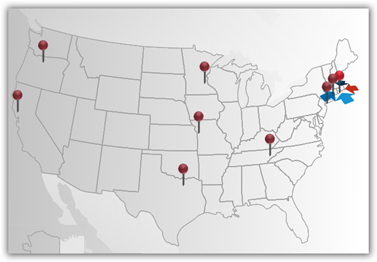
This is a nice welcome as it will enable more providers, hospitals and so forth to connect and share medical information securely.  From a data standpoint this is imageinteresting that the two areas of code are being separated so I am guessing we have a little bit more on the back end with changing the front end to have fewer working parts as far as creating the ability to use the NwHIN network.  Below is a map that shows some of the work in progress with practices and other healthcare IT entities connected t the NwHIN system.  BD 

image

Hospitals and Providers Using NHIN (Nationwide Health Information Network) To Connect and Share Medical Records With the VA and DOD And Even With Each Other

One does not need the CONNECT protocol to connect to the NwHIN but an open source project that all can contribute to is certainly a winner.  BD 

“CONNECT is an open source software and community that promotes IT interoperability in the U.S. healthcare system. CONNECT enables secure electronic health data exchange among healthcare providers, insurers, government agencies and consumer services. CONNECT 3.3 includes new features, support for new NwHIN technical specification for health information exchange, and more.

image

ARLINGTON, VA – The Office of the National Coordinator for Health IT has made available the next version of the Connect gateway software that incorporates the most up-to date technical standards and descriptions for the nationwide health information network (NwHIN) Exchange to support functions like patient discovery and query for and retrieve documents.

Connect gateway and adapter software uses NwHIN standards and services to enable healthcare organizations and federal agencies to share patient information securely through the Internet.

We plan to separate out the gateway from the adapter lines of code, which are fairly tightly coupled. That means it’s been difficult to implement for many organizations,” Thompson said at a March 15 conference about military electronic health records (EHRs).

The NwHIN Exchange has been an organization for advanced exchange for primarily federal agencies and large healthcare organizations because of a requirement that limited participants to federal contractors or grantees.image

It has 25 partners including DOD and VA, which uses NwHIN to share information at 11 virtual lifetime electronic record (VLER) sites, and the Social Security Administration, which has 300 provider organizations exchanging data to accelerate disability determinations.

More changes are coming. By December, ONC will move Connect out of its purview to a distributed development program in an open source community and is considering a variety of organizational approaches, including adopting a custodial agent process, similar to the Veterans Affairs and Defense Departments to develop their integrated EHR.

http://www.govhealthit.com/news/onc-advances-connect-exchange-tools

Thursday, February 9, 2012

Microsoft HealthVault Connects to Astra Candelis Cloud Imaging Solutions–Take Your Ultra-Sound Images With You

It was just a couple days ago I wrote about endoscopy imaging for HealthVault and now we can ultrasounds to the list of images you can store in your PHR.  One nice feature is to not have to wait for someone to prepare a DVD of images.  BD 

Multi-Media Data Sharing Comes to HealthVault PHR–Store and Share Your Endoscopic Videos From Physicians

Candelis’ ASTRA cloud-hosted suite of services is providing for the secure transferring of patient digital medical images and studies to patients’ Microsoft HealthVault accounts upon their request. 
Microsoft HealthVault is a personal health application platform that lets consumers gather, store and share health information online. 
These services benefit patients in a number of ways:image

  • Patients can obtain control of, archive and easily access their medical images stored in HealthVault from any Internet connection.
  • Patients will have full control over their data and can grant access to family members or caregivers as they desire. As an example, expectant couples can easily share Ultrasound images of their baby with loved ones.
  • Patients can avoid unnecessary duplicate imaging procedures and associated healthcare costs.

image

The connection of Candelis’ ASTRA Services with the HealthVault platform also benefits healthcare providers in the following ways:

  • Access to past imagery can provide caregivers with more information to help improve patient care
  • Costly CD/DVD publishing and distribution can be eliminated

http://www.candelis.com/products/MHV

Tuesday, February 7, 2012

Multi-Media Data Sharing Comes to HealthVault PHR–Store and Share Your Endoscopic Videos From Physicians

Back in August of 2011 Cook Medical announced the endoscope and it’s availability and now with the HD camera it looks like you get some really good graphics with imageendoscopic procedures and have the opportunity to store them in your PHR with HealthVault.  First we had the opportunity for doctors to share and collaborate and now you store your own once your doctors has made the video available.  I have several interviews over the years with Cook Medical who is the largest privately owned device and technology company in the US.  The device for the physician’s side is touch screen. 

Cook Medical Introduces Endoscope With an HD Camera Attached- Portable Imaging System for Urologists

“With high definition video and still-image capture capabilities in a compact, portable setup, endogo HD allows a physician to share and review exam findings imagewith the patient or family immediately following the exam, at the patient’s bedside or in a waiting room. A resident can also share captures with the attending physician, which may reduce the need for repeat procedures. With the endogo HD, OR imaging capabilities can now be available throughout the facility, wherever a procedure is performed. The combination of data acquisition, storage, management and the synchronization of patient folders in an easy-to-use Web application makes it possible to send an image or video over a secured connection to a referring doctor outside the facility.”

If you do not have a HealthVault account, there’s always a permanent link on the Medical Quack to the site to find out more information, as it is right above the quick and easy utility to find clinical trials.

image

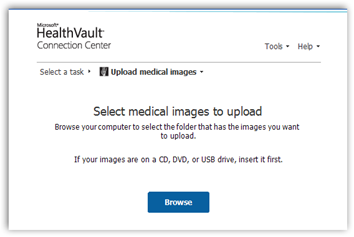
HealthVault also has a nice dicom viewer for Windows users and perhaps soon they will develop it for other operating system but you can store your shared dicom images in the Azure cloud with HealthVault as well.  This feature became available last April.  It is kind of surprising today if you end up in an ER room that some of them do not have a viewer on their available computers either.  You can read more at the link below on how the “connection center” works with dicom image storage and it’s not bad at all with pretty good clarity.  BD 

HealthVault Begins Storing Medical Images (Dicom) Using Windows Azure Cloud Services With Full Encryption

Envisionier, the leader in portable endoscopic capture and data integration, today announced the first endoscopic multimedia integration between Microsoft HealthVault and the eGoWorks® application. This connection enables a patient to access, view and share their endoscopic multimedia information stored within HealthVault, an online service for managing personal health information.

With a patient’s permission, surgeons using eGoWorks services will have the option to share medical image exams and associated reports directly with a patient authorized HealthVault account. Patients will generate a secure challenge and password combination that will allow the patient to “pick up” the data and move it into their personal imageHealthVault record.

David Guy, Envisionier’s CEO states, “By connecting with HealthVault, Envisionier seeks to improve the exchange of pertinent medical endoscopic data that has been tethered to legacy video tower systems or EMR systems unable to direct connect. The integration with HealthVault allows the patient to control their medical data ”

“Patients are the clear winners with Envisionier eGoWorks’ new HealthVault connection. Not only can individuals now easily share endoscopic multimedia and reports among members of their care team; they can also be confident that they’ll have access to the information for years to come to better detect trends and changes in their health. We’re excited to have Envisionier as an ally in our journey to empower patients to take charge of their family’s care” stated Sean Nolan, Microsoft Distinguished Engineer.
eGoWorks®’s connection to HealthVault enables electronic movement of data rather than patients transporting records, reducing time and cost associated with redundant exams while additionally creating a longitudinal endoscopic record for the patient to share with primary care physicians and specialists.

http://www.prweb.com/releases/prweb2012/2/prweb9168795.htm

Friday, February 3, 2012

MMR Global PHR Law Suits and Patents–Company That Drew Attention With the Russell Armstrong Suicide in Hollywood

The money keeps disappearing in one way or another and now there’s another question here with this settlement between of a balance of $25 million owed.  We remember the sad suicide and the real housewife star Taylor Armstrong as that was all over the news. 

MMR (MyMedicalRecords) Lawsuit Looking for Shareholder Answers With Taylor and Russell Armstrong–The PHR and Hollywood Suicide Connection, Where’s the Money?

Surgery Center Management, LLC issued a payment of $5 million and then took it back after they said MMR refused further negotiations.  This back link explains their biotech interest outside of the Health IT portion of the business.

Favrille Biotech and MyMedicalRecords.com, Inc. Announce Merger Agreement

In the meantime it appears business as usual with promoting their personal health record and have sold share overseas as well to internationally help market the PHR software and service.  Are they ready to step in to where Google Health left off?  BD 

Health IT Company MMRGlobal (MyMedicalRecord.com) To Sell 4 Million Shares To Chinese Investment Partner

LOS ANGELES, CA, Feb 02, 2012 (MARKETWIRE via COMTEX) -- MMRGlobal, Inc. MMRF -2.56% ("MMR" or the "Company") today announced that pursuant to the terms of its December 9, 2011 Settlement and Patent License Agreement (the "Agreement") with Surgery Center Management, LLC ("SCM"), the Company has filed suit to collect the initial payment of $5 million, due on December 23, 2011, along with an application to the court for a Right To Attach Order and Order For Issuance of Writ of Attachment. Pursuant to the terms of the Agreement, the remaining $25 million is due in annual payments of $5 million each, starting November 15, 2012.

Notwithstanding the existence of the lawsuits, SCM and MMR are attempting to work on a settlement. Presuming the parties are able to successfully settle this matter, MMR may conclude additional transactions with affiliates of SCM on terms that are beneficial to the Company's stockholders. According to Robert H. Lorsch, MMRGlobal CEO, "Based on the review of outside accountants, a business transaction could represent substantial benefits and significant valuation to MMRF shareholders at the conclusion of a transaction which I believe that both sides would like to accomplish."

On December 29, 2011, SCM issued the $5 million to MyMedicalRecords, Inc. in the form of a cashier's check based on the terms of the Agreement. Despite SCM's delivery of the cashier's check to the Company, SCM then retook possession of the check after MMR refused to renegotiate certain terms and conditions, including the termination provisions surrounding the remaining $25,000,000 owed under the Agreement. SCM has also withheld the money in an attempt to leverage MMR into a transaction on terms that MMR believes are not in the best interest of its stockholders.

The Patents include any issued or pending U.S. and/or foreign patent applications and/or issued patents, including, but not limited to, Singapore, Hong Kong, Israel, South Korea, Mexico, New Zealand, Canada, Germany, Japan, the United Kingdom, and the United States. The Agreement includes the settlement of any potential claims by MMR against SCM and its affiliates for any past patent infringement.

Despite the dispute with SCM, MMR is continuing to operate its business in the normal course and is working to further exploit its Health IT patents and other biotech intellectual property.

http://www.marketwatch.com/story/30-million-due-to-mmrglobal-under-non-exclusive-patent-license-agreement-2012-02-02?reflink=MW_news_stmp

Friday, January 20, 2012

Blue Button Download of Personal Health Data to be Expanded to Federal Employees and Their Families

Below is a little history on the Blue Button to include the HealthVault information that Veterans have been able to use as well.  To me this is the way to go to get your own information as you know who has access…you…and anyone else you designate. 

VA Blue Button Update–If You are a Vet or an MD Seeing a Vet Get the Health Data Available With Patient Ability to Download (Video)

I have posted on this topic a few times but the White House has released a video that gives a quick over view and man Vets have ben able to retrieve their information to keep or choose to share with their doctors. If you are a private practice doctor seeing a Veteran, it’s worth mentioning in case they have not had the chance to download their information

VA Can Now Use the “Blue Button” to Download Their Data from Their PHR (Personal Health Record)

Also, the information can be sent to Microsoft HealthVault for storage as well to share with doctors outside of the VA with a paperless method instead of printing and I am guessing once in place federal employees will enjoy the same options. 

Also worth mentioning is that folks on Medicare can do the same thing and get their data, so if you are not a Vet, check out the link below.  BD

Millions of federal employees, retirees and their families will soon be able to use the Blue Button to download their personal health data from the websites of their health plans.

In a Carrier Letter issued on December 19, 2011, the U.S. Office of Personnel Management (OPM) asked all health insurance carriers in the Federal Employees Health Benefit Program (FEHBP) to add Blue Button functions to personal health record systems (PHRs) on their websites.image

Blue Button allows patients to see, download and keep their personal health data by clicking the "Blue Button" on a secure Internet site. Patients can then choose to share their data with their physicians or family members or make it available if emergency treatment is needed. Blue Button downloads are delivered in text files that can be downloaded, read, stored and printed on any computer without special software. Patients can also authorize use of a Blue Button transfer of their medical data from a treating physician to another medical provider. An important innovation that enables patient's easy access to their personal health information, Blue Button has already been adopted by some 500,000 veterans, servicemembers, Center for Medicaid and Medicare Services (CMS) beneficiaries in just 14 months.

http://insurancenewsnet.com/article.aspx?id=326502

Sunday, January 1, 2012

HealthVault on Windows Phone Mobile Made Possible by iTriage, a Wholly Owned Subsidiary of Aetna

Here’s one more acquisition from Aetna in the Health IT area and it appears that down the road, connecting to Aetna’s PHR they provide to get this data back into their files could be in the works, but you have a choice here to say yes or not.  I imageremember when HeatlhVault was announced, former CEO of Aetna said publicly that Microsoft had no idea what they were doing and could not do it as well as an insurance company, well that was a about 3 years ago or a little more and now look at what’s happening.  It’s all about the data and risk assessments from the insurance side. 

You can almost guess too that Aetna will be using the developers to create more mobile apps that will get more patient data into their files, so just be aware and I’ll keep my HeatlhVault file separate and closed off from any insurer to access with any data connections for sure.  I can always share what I want or provide an exported spread sheet so no worried there and don’t want insurers poking around in my PHR for now. 

If you watch a little television of late you can see the advertisements from Aetna talking about their PHR and wooing consumers into the data game. As insurer contracts get more complicated and complex it’s rolling over to the consumer to find out where you can go, who can see and what will be paid, no wonder they wanted a mobile arm here to develop even more software for smart phones. I did put the application on my Windows Phone but now I’m thinking about taking it off…maybe.  I’ll see how often I use it. 

HealthVault Free Mobile App For Windows Phone Is Out from the Zune Store To Download & Got My Ducks Updated

Not only in this instance but in other areas it’s interesting to see how the health insurers are moving into Health IT and who they are choosing to acquire and partner with.  BD

Insurance giant Aetna has purchased Lakewood-based Healthagen, developer of iTriage, a mobile application that helps injured or sick people determine what's wrong and find local treatment.

Healthagen co-founder Peter Hudson confirmed the deal Monday after Aetna officials announced it during an investor-day event last week. Terms for the transaction, which occurred during the fall, were not disclosed.

Healthagen has been growing quickly, with downloads of its free iTriage app for Apple and Android phones exceeding 3 million, triple the number just a year ago.

http://www.denverpost.com/business/ci_19582144

Wednesday, November 2, 2011

Attack of the Killer Algorithms-Occupy Wall Street Part 4 Health Insurance Style - One More App For Folks Who Are Tired of Flawed Algorithms That Require A Ton of Work and Research Time To Create “Perfect” Data Files for Insurers And Others Analytics Processes

I have been wanting to address this for a while and yet we have one more contest to entice consumers to use an application to improve their health.  What is really funny about these contests is that almost none of the folks who write them will ever use it themselves, in other words nobody will eat their own dog food here and developer want to make a few bucks.  We also have the other side with the naïve folks that think apps cure all evils and they don’t.

If we had consumers that were motivated and had information that was not flawed or skewed with marketing maybe this wouldn’t be so bad, but geez, nobody gets this.  When it comes time to create a simple personal health record, which I think is great, nothing wrong there as all to have life saving information and a simple history to help the doctors treating you.  The absolute basics are allergies and medications for starters and then additional information from there is great, like past surgeries, illnesses, etc.  That information is helpful all the way around.

Now here’s where all of this becomes work.  You have services that bring in your medical claims and make that information available and guess what, we have errors and the consumer today should not be responsible to do all the extensive leg work to fix all of this.  This is one big reason why consumers don’t want to mess with it at all.  When you have flawed data in claims going back 20 years or so and you have to fix it that’s a lot of work so insurers can have “perfect” history data files on you. 

The next step is their analytics and there’s some good that comes from some of it as it is not all bad, but when some of the new areas of predictive behavior comes in and you are scored and assessed with an algorithm that is only 60% correct and it is take down to an individual level, we have a problem. This is “flawed data discrimination and it’s happening all over.  We thought we were done with that years ago, right…wrong…same crap just done by the numbers today.  If you want to take numbers and crunch them to run reports, fine as we see those all the time, but again when refined down to a personal level with who knows what type of algorithm, we have problems. I can understand there has to be some filtering but today we have companies with business analytics that have it down to some very specific parameters of which some are needed but some are not needed. 

This is what is happening today and the reasons for the madness and frustration.  We don’t get the “whole truth” and are judged “on the curve” and when you are talking healthcare and money, “that curve is not good enough” for consumers or anyone; however “curves” lead to profit and that’s the issue. Here’s a good example of WellPoint giving you some new web algorithms so you can “fix yourself” and God forbid some of these mistakes get into the MIB as you may be screwed for life if they don’t fix it as all insurers take those records as gospel.  I know a couple of people who cannot get insurance as they can’t get their files corrected at the MIB and their doctors are dead who would normally help them so they are screwed. 

WellPoint Puts More Algorithms Online So You Can Go Fix Yourself and Understand What a Grandfather Is

Take someone looking for a job that doesn’t have their resume that is in the exact format to get through the “job application algorithms”.  If nobody adjusts it to make it through, they end up in the endless circle of resumes that go nowhere.  You still need a human in this process and an algorithm cannot do the entire process.  I’m sure some of the folks in the Occupy Wall Street group have been through this scenario.  A human never gets to see it and the applicant never gets to talk to a human.  You cannot believe all the reports you see today as marketing has come in to spin the numbers.  We are too trusting and still think that math will prove accuracy 100%, it does not.  This is called computer coding and one can write for “accurate” results or “desired” results and the 2 are not always the same. 

When you get your insurance claim denied, chances are the algorithm did it as it looks at data only, not a human and they run 24/7 on servers all the time.  This is a good place to put the trailer again for Sicko and look again.  The woman in the ambulance example was a great example of an algorithm that denied payment.  As she says when was she supposed to approve it…algorithm doesn’t know but data was lacking…algorithm says claim denied. 

Sick Trailer

There’s another part in the movie to where a woman’s money was rescinded on a claim already paid..why…algorithm says you forgot to include reporting a yeast infection you had several years ago! It’s the algorithms folks.  If their data is not flawed or contains errors, then how come this happens…automated mailings and somehow the envelope stuffer algo had a problem that day.  Things like this happen but if there’s information in your file you have to prove them wrong, even though you entered none of the data they are looking at. 

Rogue Algorithm Strikes Coventry Healthcare in Missouri-EOB Statements Sent to the Wrong Patients-Fried Data or Wrong SQL?

Let’s take a look outside of healthcare for a moment…how about this Quant on Wall Street who for 3 years used flawed software with clients…and knew it…and didn’t fix it…I figured he/she had to be somewhat flagrant for the SEC to make this catch. 

SEC Sues Quant–Undisclosed Error in Trading Algorithm- Miscalculating “Risk”-Healthcare Software Evaluates This Factor Too

Let’s come back around to the MIB who has been collecting information about us for years, before there were computers.  They used to do just that but with modern times and marketing, guess what, they sell too and now records contain more than just healthcare information.

The MIB – Health Insurance Bureau Business Intelligence Mining May Go Beyond Just Healthcare Information

Here’s a screenshot from one of their web pages and guess what the “problem applications” are…it’s us…we are problems in their eyes if we don’t match the exact parameters.  Does this not make you feel real good to know that when you apply for insurance or their services are used for any reason that just going in the door that “we are potential problems”.  It’s pretty disgusting but that’s how the analytics sales folks make their pitch. 
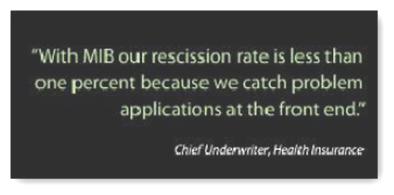
Now I like analytics and how smart it can make us too, but I can also see when they are abused.  Again we have people out there that think a set of algorithms can solve everything for decision making…not. 

Well now that you have been given your claim information with errors possibly, we have other folks now writing software to help you work with it. Are consumers jumping on the bandwagon to learn yet more software to fix errors and get into the confusing pricing of healthcare….nope.  Do I even have any interest myself in doing this…nope…and I deal with and learn a lot of software. Does this grab my attention…nope.  Well I guess I’m like every other consumer out there that says give me some value and this stuff isn’t doing it. 

Let’s go a little further, would you venture to see HHS Secretary Sibelius using such software…I would love to be wrong but I don’t think she would touch it at all as she is very busy like the rest of us and who has time!!  It’s always for “those guys over there” and the software developers just want to make a buck.  Doctors have had this battle longer than we have as consumers with flawed data and all the “rating” web sites and their flawed data.  I jus wrote another chapter on that flawed data today.  When I found my former MD who had been dead for 8 years still listed and taking new patients…Houston we have a problem. 

HealthGrades to Merge with CPM Marketing–Will Their Data and Questionable Algorithms Will Be Improved For Consumers?

Sometimes we struggle to get insurance and boy does it not make us mad to see wasted money with situations like the City of Buffalo who didn’t keep their algorithms going in the right direction and paid out $2 million on deal employees with insurance premiums.  But when it comes back to the consumer…nope you wrong as we have our data and we are right…just because it’s on the computer screen does not make it accurate. 

City of Buffalo Has Paid Over $2 Million to Provide Health Insurance for Hundreds of Dead People-Some as Many as 4 Years

I’m going to pitch my favorite mathematician/professor again from NYU and if you have not heard this radio interview, do it.  He’s right with flawed data and marketing and once you listen up you may not be as gullible next time someone throws numbers and reports in your face, and oh by the way, read his book too if you can.

“Numbers Don’t Lie, But People Do”–Radio Interview from Charles Siefe–Journalists Take Note, He Addresses How Marketing And Bogus Statistics Are Sources of Problems That Mislead the Public & Government

So when it comes to Occupy Wall Street, how do those folks fight this battle?   How do we all fight it?  You can’t see those algorithms, you can’t touch them and most of the time you can’t talk to them so what do you do…it’s frustration at the highest level.  So this is the movement on their part, how do they address this?  They belong on Wall Street as Washington is too digitally illiterate to realize they need greater technologies to make laws and get their data sorted for them.  I have several posts around this blog about the Congressional lack of digital literacy.  Here’s one flaming example… as we just talked about all that flawed data we have in our health information going back years…these two folks think this should all be put out on the web and as taxpayers we should pay millions to have this done?   They think money grows on trees for IT infrastructure project.  Law enforcement should have access but this shows 2 really bad digitally illiterates with these 2 senators. 

Two More Senators Propose More Bills to Publish Medicare Claims Data Without A Hint of Digital Literacy Relative to Cost and Time

So what do you do when you have algorithms at one end and digital illiteracy at the other that can’t make laws!  You go sit on Wall Street where all the code was written that re-arranged the money in this country and the world.  I get a kick out of journalists that don’t get this and I guess there’s some more digital illiteracy or maybe putting the OMG ratings in front of good reporting so they can keep their jobs. 

There has to be some level of forgiveness with the parameters of how the algorithms run, otherwise we have ethics problems and they are everywhere you turn today.  At the Los Angeles CareNow Free Clinic, he summed it up well seeing a woman with advanced breast cancer who did not have insurance and perhaps it could have been caught earlier.  By the way he had to be there as a “consultant” as the California medical board could not get their “algorithms” together to allow doctors from out of state to volunteer. 

Dr. Oz Says “Enough is Enough” As He Volunteered at the CareNow Free Clinic In Los Angeles “Failure of Basic Morality in the US”

This system of algorithms for care is not working and the Occupy Wall Street folks are right on the money with the healthcare side of this and we all hate it.  We don’t care if insurers are making profits for shareholders and it’s almost time that President Obama pull a “Roosevelt” as in at the end of World War II to where Schering was so corrupt that the US government took over all their US assets.  It’s drastic but where else are we headed with all of this…can someone give me a better answer as we are constantly uncovering inconsistencies with mathematical formulas today and nobody is minding the shop? 

Back in August of 2009 I made a post about needing a US Department of Algorithms to ensure everybody’s math was correct and maybe that time has come.  I have sure had a lot of folks agree on that topic as with the complex sophisticated systems we have today, nobody knows when accuracy leaves off and marketing comes in to sell us a bill of goods. 
If you listen to the President of late, he says the the same thing “its in the math”, so how do the folks at the Occupy movement take a solid stand, other than the fact that as humans we all know something is not right and it’s time to ask questions and get answers on how the math moves all the money around to create the 99% and 1% groups we have today. 

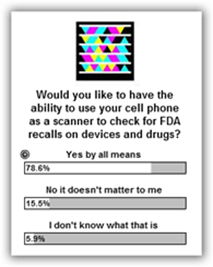
If you want to give consumers something of value with healthcare, get those bar codes out there so we can find recalls with an app and either save a life or prevent illness when recalls occur and stop the insanity of trying to fix all of us with an app that we and the folks who also develop the app are not going to use.

Healthcare Bar Code Posts

Below is an article I wrote where a man died implanted with a device that was not pulled and used in surgery and it failed.  I call this a good app that will have consumer interests and is not one of “its for those guys over there” apps.  Stop with the insanity of apps that have little or no value and save some money.  Parts 1, 2 and 3 of the “Attack” are listed below.  We have folks that don’t listen to consumers when it comes to consumer IT.  If you start with something that has value for consumers other apps will follow and this is the ticket.  BD 

Micro-Cap FDA Recalls Never End

The Robert Wood Johnson Foundation (RWJF) has announced a $100,000 contest for a health IT application that will help consumers use published quality data to choose among physician groups and hospitals in 16 areas around the country.

These 16 communities--ranging in size from rural counties to metropolitan areas to whole states such as Maine, Minnesota, and Wisconsin--have all been involved in RWJF's Aligning Forces for Quality program since 2006. The 10-year, $300 million initiative focuses on improving the quality and reducing the cost of healthcare. An important facet of the program is the public reporting of data on the cost and quality of individual hospitals and medical practices (but not individual physicians)


Occupying Wall Street–It’s All About the “Attack of the Killer Algorithms”–The Unfair and Marketing Exploit of Ethics Using Math–This Could be a Subject for Michael Moore to Explore and Document In a Movie
“Killer Algorithms: Part 2” Disturbing News for Consumers With Credit Scoring Adding New Data Analytics–Some of the Same Methodologies Used by Insurers With Flawed/Potential Erroneous Data–One More Reason to Continue Occupying Wall Street

“Attack of the Killer Algorithms” Part 3–Vatican Doesn’t Like It Either–Occupy Wall Street Belongs in New York As They Don’t Do Code or Algorithms in Washington–Only Find time To Talk Abortions

http://www.informationweek.com/news/healthcare/patient/231902101?cid=InformationWeek-Twitter

Sunday, October 16, 2011

Orion Health to Acquire Microsoft HIS and RIS/PACS Assets–Focus on Asia Pacific Hospital Market For Medical Records and Collaboration with Amalga UIS

Back in July of 2010 Microsoft announced that the HIS System would no longer be sold in the US but rather would be sold outside of the US.  Microsoft’s Amalga Business Intelligence aggregation though is still well and alive and in use in many hospitals in the US.  As I understand here as well is that Microsoft and Orion will together market that portion of the product and thus it would be available both inside and outside the US.  Officially it is called the Amalga United Intelligence system that can rid on top of an existing medical record system. 

Microsoft to Halt Sales of Amalga HIS Systems – Full Speed Ahead With Amalga UIS and HealthVault

If you want to go back in time you can see where I did a video, actually a nice phone video in person with the CEO of Bumrungrad and Nate LeMore from Microsoft who are both mentioned here.  I was at the first Medical Tourism conference here in Los Angeles. At that point in time we were talking about using HealthVault and taking your records should one decide or need medical services over seas.  image

Interview with Curtis Schroeder, CEO Bumrungrad International Hospital and Nate McLemore, Health Solutions at Microsoft – International Personal Health Records with HealthVault

You can read the full press release here.  Amalga was actually born in the US and was developed on the east coast in the US and you can read more about Dr. Craig Freied below and see what the Freakonomics guys had to say too, very entertaining and interesting.  BDimage

Staying Alive – Dr. Craig Freied Co-Founder of (Azyxxi) Microsoft Amalga And Hospital Safety (ABC 20/20)

From the website:  “Orion Health has offices in the United States, Canada, United Kingdom, Spain, Australia and New Zealand, and our growing network of partners includes leaders in technology and services such as Accenture, Cisco, IBM, Initiate and Oracle Corporation.”

Orion Health, an independently owned software company that offers HIE, integration, and clinical portal products, will announce later today that its subsidiary, Orion Health Asia Pacific, has signed an agreement to acquire the Microsoft software suite formerly known as Amalga HIS and Amalga RIS/PACS. The companies will also announce that they will co-market Orion Health HIE and Microsoft Amalga Unified Intelligence System (Amalga UIS) to health information exchanges and integrated delivery networks.

Amalga HIS was developed at Thailand’s Bumrungrad International hospital by Global Care Solutions and was acquired by Microsoft in October 2007. It  offered 50 clinical and administrative applications (including lab, medication management, RIS/PACS, electronic medical records, CPOE, clinical documentation, financial management, and HR management) that were used by seven Asia-Pacific hospitals. Microsoft announced that it was ceasing ongoing development of the product in July 2010, but would support existing customers for five years.

http://histalk2.com/2011/10/16/orion-health-acquires-microsofts-former-his-product-companies-will-co-market-offerings/comment-page-1/#comment-17371

Sunday, October 9, 2011

Relay Health from McKesson Now Offering Blue Button Transfer of Personal Health Records

If you are not familiar with the Blue Button program with being able to get your personal health records, I’ll include the video below again to explain how it works for Veterans and Medicare patients.

Blue Button Mobile Available for Veterans to Download and View Personal Health Records

You can choose to share with your doctor if you like and again, why not get them to have as part of your health history.  image

VA Blue Button Update–If You are a Vet or an MD Seeing a Vet Get the Health Data Available With Patient Ability to Download (Video)

I have posted on this topic a few times but the White House has released a video that gives a quick over view and man Vets have ben able to retrieve their information to keep or choose to share with their doctors.  If you are a private practice doctor seeing a Veteran, it’s worth mentioning in case they have not had the chance to download their information.

White House Makes Official Introduction of the “Blue Button”–Microsoft Demonstrates HealthVault Integration And Sharing

In addition you can also transfer your health data to the Surgeon General’s My Family Health Record.   I have not heard anyone talk about it in a very long time so I do wonder if the Surgeon General uses the Surgeon General’s PHR at times too?  Nobody says a word and silence from government executives or workers using a PHR is deafening, but everyone tells you as a consumer you need to do this, and it is a good idea but duh?  The government can’t seems to get their act together here and be any kind of role model for some reason and this is consumer technology for “everyone” right?  BD  

Also worth mentioning is that folks on Medicare can do the same thing and get their data, so if you are not a Vet, check out the link below.  BD

ATLANTA, Oct 04, 2011 (BUSINESS WIRE) -- RelayHealth, a leading provider of connectivity solutions for health information exchange, patient-centered medical home and clinical collaboration, announced its support of the Blue Button(R) initiative by enhancing its existing capabilities around downloading and transporting patient personal health records (PHR). Now, every patient who accesses his or her health information on the RelayHealth network has more options to download, print, and share that information with their providers with a single click.

The President of the United States first announced the Blue Button initiative in August 2010. The concept was simple: patients should have one-click access to all of their personal healthcare data. The Department of Veterans Affairs developed the program in collaboration with the Centers for Medicare and Medicaid Services (CMS), and the Department of Defense, along with the Markle Foundation's Consumer Engagement Workgroup.

During a recent conference held by the Office of the National Coordinator for Health Information Technology, the challenge was given to health information technology vendors to "set data free" -- meaning to let all patients have easy, secure access to their health information through the Blue Button

http://www.marketwatch.com/story/relayhealth-gives-patients-immediate-access-to-patient-health-record-data-via-blue-buttonr-2011-10-04

Related Posts Plugin for WordPress, Blogger...